The chord desk
A small chord library. A clear way to read it.
These charts list strings 6 to 1 from left to right, low E to high E. A circle means open; × means leave that string out; a dot shows a fretted note.
8 chord shapes
Em
E minor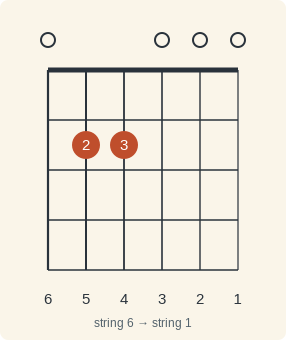
Frets 6 → 1: 0, 2, 2, 0, 0, 0
Read the shape as text
- 6 / low E: open
- 5 / A: fret 2, suggested finger 2
- 4 / D: fret 2, suggested finger 3
- 3 / G: open
- 2 / B: open
- 1 / high E: open
All six strings can sound. Check that your fretting fingers do not touch the open G string.
Am
A minor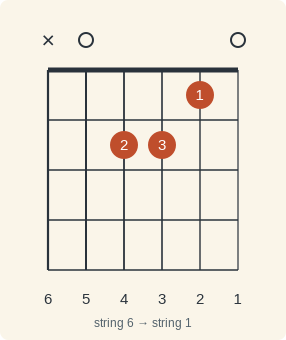
Frets 6 → 1: ×, 0, 2, 2, 1, 0
Read the shape as text
- 6 / low E: leave out
- 5 / A: open
- 4 / D: fret 2, suggested finger 2
- 3 / G: fret 2, suggested finger 3
- 2 / B: fret 1, suggested finger 1
- 1 / high E: open
Start your strum at string 5, the open A. Keep string 6 out of the strum.
E
E major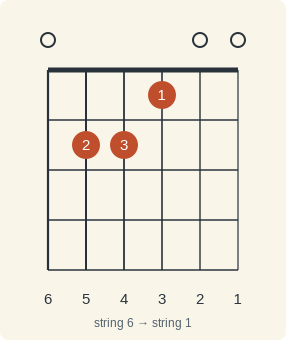
Frets 6 → 1: 0, 2, 2, 1, 0, 0
Read the shape as text
- 6 / low E: open
- 5 / A: fret 2, suggested finger 2
- 4 / D: fret 2, suggested finger 3
- 3 / G: fret 1, suggested finger 1
- 2 / B: open
- 1 / high E: open
This adds a first-fret G-string note to the Em shape. Check each string individually.
A
A major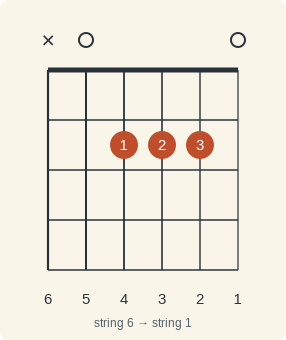
Frets 6 → 1: ×, 0, 2, 2, 2, 0
Read the shape as text
- 6 / low E: leave out
- 5 / A: open
- 4 / D: fret 2, suggested finger 1
- 3 / G: fret 2, suggested finger 2
- 2 / B: fret 2, suggested finger 3
- 1 / high E: open
Three fingers share fret 2. Try small position adjustments rather than adding pressure.
D
D major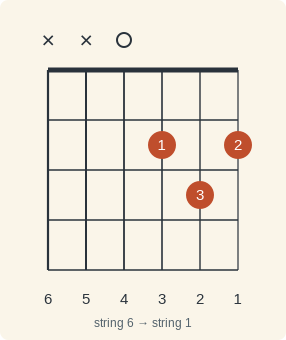
Frets 6 → 1: ×, ×, 0, 2, 3, 2
Read the shape as text
- 6 / low E: leave out
- 5 / A: leave out
- 4 / D: open
- 3 / G: fret 2, suggested finger 1
- 2 / B: fret 3, suggested finger 3
- 1 / high E: fret 2, suggested finger 2
Start at string 4, the open D. Strings 6 and 5 are left out in this shape.
Dm
D minor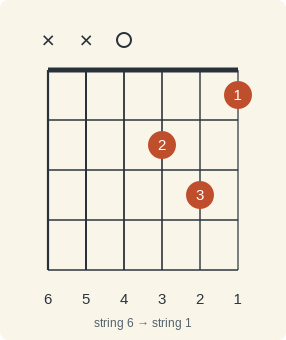
Frets 6 → 1: ×, ×, 0, 2, 3, 1
Read the shape as text
- 6 / low E: leave out
- 5 / A: leave out
- 4 / D: open
- 3 / G: fret 2, suggested finger 2
- 2 / B: fret 3, suggested finger 3
- 1 / high E: fret 1, suggested finger 1
The first-fret note is on string 1. Keep the two lowest strings out of the strum.
C
C major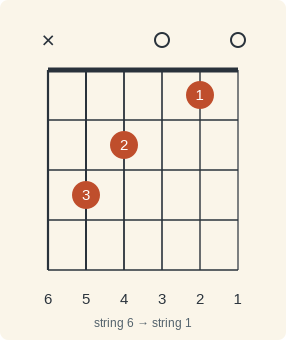
Frets 6 → 1: ×, 3, 2, 0, 1, 0
Read the shape as text
- 6 / low E: leave out
- 5 / A: fret 3, suggested finger 3
- 4 / D: fret 2, suggested finger 2
- 3 / G: open
- 2 / B: fret 1, suggested finger 1
- 1 / high E: open
Listen for the open G and high E between the fretted notes. Start at string 5.
G
G major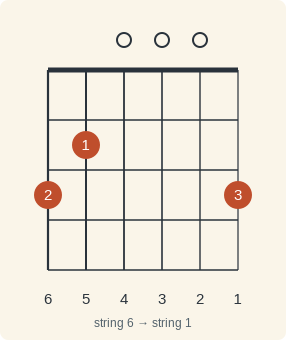
Frets 6 → 1: 3, 2, 0, 0, 0, 3
Read the shape as text
- 6 / low E: fret 3, suggested finger 2
- 5 / A: fret 2, suggested finger 1
- 4 / D: open
- 3 / G: open
- 2 / B: open
- 1 / high E: fret 3, suggested finger 3
This is one three-finger G shape. Other valid fingerings exist; use one that suits your instruction.
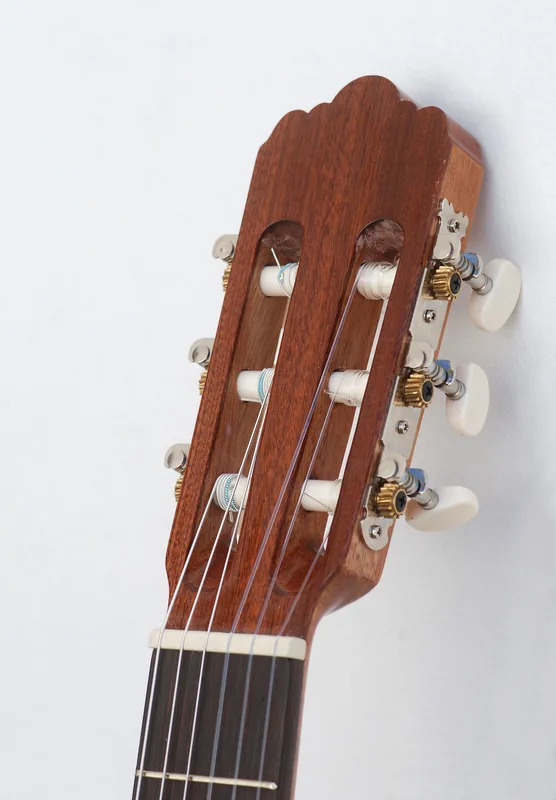
The charts list strings 6 to 1 from left to right, low E to high E. A circle means open; × means leave that string out; a dot shows a fretted note. Numbers inside dots are suggested fingers.
Enjoyed a practice desk with working tools, and official firsts kept unblended?
No pop-ups. No intrusive advertising. Just interesting stuff. A little support helps the next ReallyByte site get built.